Polyvagal-informed sessions
I work with the nervous system to make room for feeling. That usually leads to more capacity to rest, more spontaneity, and more energy for life.
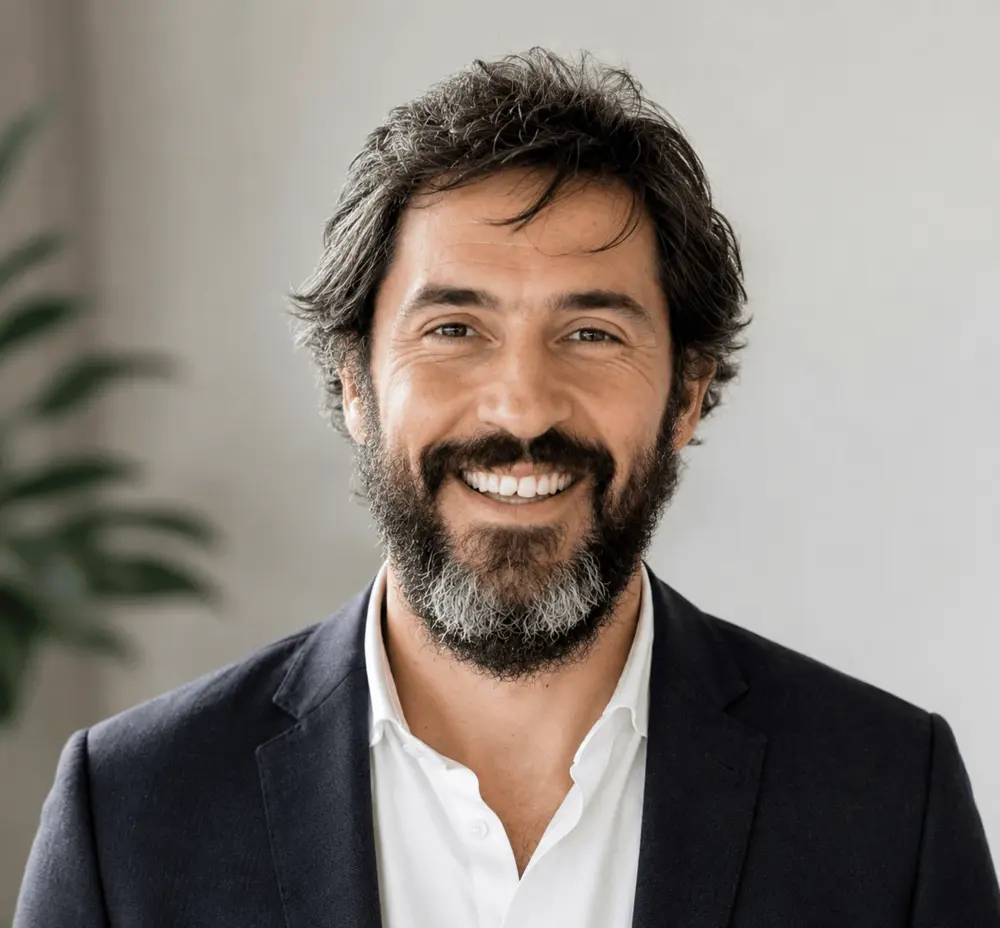
Dario Droznes
Certified Somatic Experiencing® Practitioner
What might bring you here
You've heard the nervous system has more to do with it than talking alone could reach
Anxiety, overwhelm, and old trauma can live in the body long after the mind has understood what happened
Understanding why something happened hasn't been enough to change how the body still responds to it
Terms like fight, flight, freeze, or shutdown describe something you may have recognized in yourself
Coping strategies that work on symptoms without getting underneath them have started to feel thin
You're ready for an approach that works with the body, not just the story
What is Polyvagal Theory?
Polyvagal Theory was developed by Dr. Stephen Porges. It describes how the autonomic nervous system continuously scans the environment for cues of safety and danger — below the level of conscious thought. Porges called this process neuroception.
The theory maps three broad states. A ventral vagal state, where connection and rest are available. A sympathetic state of mobilization — fight or flight. And a dorsal vagal state of shutdown, collapse, or numbness.
None of these states is a problem in itself. Each one made sense at some point. The difficulty shows up when a system gets stuck in one of them, or when it shifts states faster than circumstances warrant.
This work starts from a different premise than talking alone: that these shifts happen in the body first, and that the body is where they can be worked with.
Talk therapy vs polyvagal-informed somatic work
Talk therapy
- Top-down approach
- "Tell me what happened"
- Uses language, insight, narrative
- Understands the "why" of patterns
- Outcome: "I understand my patterns"
Polyvagal-informed somatic work
- Bottom-up approach
- "What's happening in the body?"
- Works with sensation, impulse, movement, and cues of safety
- Changes the "how" of responses
- Outcome: "My body responds differently"
What this work can open up
Reading the nervous system
Learning to notice which state is running, and what it's responding to.
Capacity to feel
Feeling more without being flooded — the hallmark of a system with room to move.
Rest and energy
When the body isn't bracing for danger, rest becomes more available.
Spontaneity and play
Play is one of the first things a guarded system sets aside, and one of the first to return.
Change at the body's pace
This work moves at the speed the nervous system allows, which is why the change tends to hold.
Connection
When the body isn't on guard, letting people in takes less effort.
Frequently asked questions
Is this a clinical service?
No. I'm a certified Somatic Experiencing® Practitioner, not a licensed clinician, and these sessions aren't a substitute for medical or psychological care. This is somatic work — attention to the body, the nervous system, and what shows up in the present. Some clients do this alongside other professional support, and that combination often works well.
Are you certified in Polyvagal Theory?
My certification is in Somatic Experiencing®. Polyvagal Theory informs how I understand what happens in a session — it's a map, not a separate method. In practice, the two fit together closely: much of what Porges described in theory is what Somatic Experiencing® works with directly in the body.
How is this different from your Somatic Experiencing® sessions?
It isn't a different service. Same sessions, same method, described through a different lens. If Polyvagal Theory is the language that makes sense to you, this is the page for you.
Does it work well online?
Very well. These are body-centered sessions, but they don't require physical touch. Through guided awareness and nervous system tracking, an online session can go deep while we work with what appears in the present.
What do you charge?
$175 for a 60-minute session. Sliding-scale options are available if cost is a barrier. I don't take insurance, but I accept credit/debit cards and Zelle.
Do I have to talk about my past in detail?
Not really. These sessions don't ask you to revisit events in detail. We work with how the body is holding tension or energy in the present, at a pace that leaves room to pause.
What actually happens in a session?
We slow down and track sensation together — where it lives in the body, how it moves, what it's asking for. Using titration (small amounts of activation at a time) and pendulation (moving between activation and ease), the nervous system gradually works with what it's been holding. It's conversational, and paced by the body, not the clock.
How long is a session, and how many will I need?
A session runs 60 minutes — enough time to settle in, work with what's arising, and integrate it before we close. How many you'll need depends on your goals; some people notice shifts in a few sessions, others prefer ongoing support. We check in regularly and adjust as we go.
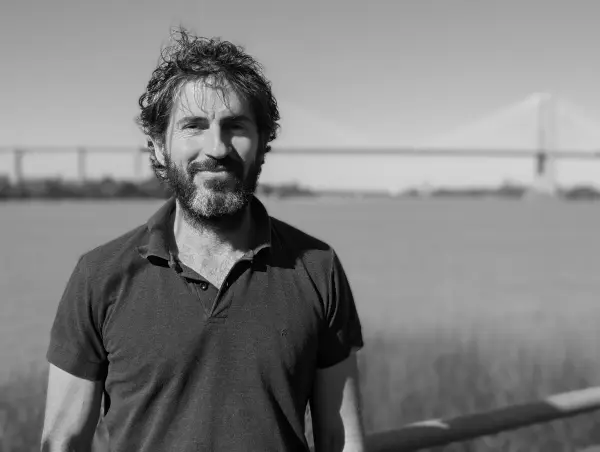
Who I am
I'm Dario Droznes, a certified Somatic Experiencing® Practitioner. I didn't come to this work from a textbook. I came to it because it changed my life. I help other people find that same shift.
Can it resolve everything at once? No. Does it work? Usually yes.
What I've found is that the body keeps track of things the mind has already filed away. Together, we work with tension, exhaustion, and overwhelm, and give the nervous system a chance to find its way back to ease.
Get in touch
Taking the first step can feel vulnerable. I'm here to answer any questions you might have.